
The Problem with Ego-Metrics
October 17, 2016
Through a few marketing conversations recently, I’ve realized more than ever that the prioritization of ego-metrics
is a serious problem.
In short, businesses need to focus on metrics that actually matter
and make a difference, rather than ego-boosting metrics.
A few of these numbers that people mistakenly rely on and prioritize for improvement are:
Why Facebook Likes Don’t Matter
You don’t own the Facebook platform, so you don’t own any
of your customer data on Facebook. Remember when pages could get likes, and actually reach a large percentage of their fans for free? Then, remember when Facebook took this away, and everybody got upset?
This is what happens when you build your house on someone else’s land and expect to own it. It’s great to increase your Facebook fanbase, yes, but never forget that you are a renter
there, not an owner.
A general rule of thumb is to never build your house on someone else’s land. While Facebook numbers can be a good benchmark
, they should NEVER be your primary marketing goal. The backend numbers of how many people are actually seeing and engaging with your content, and the number of people that take action on some other form of media you own
(such as a mailing list signup through your website, or an actual sale), are far far more important. Facebook likes in general should be a byproduct
of other marketing that you’re doing. If this is a primary KPI (key performance indicator) for you, you’re doing something wrong.
Don’t sit there and worry about how many likes you have. Worry about what your audience is doing
. The benefits of having likes on your Facebook page are that you can send them to other pieces of media and advertise to them directly, but the fact that you have the likes means nothing.
I can buy 10,000 FB likes for seriously cheap, and it doesn’t do anything for me, other than perhaps increase my value in the eyes of people who don’t know better.
Why Domain Authority Doesn’t Matter
It pains me to see businesses and marketers encouraging an emphasis on Domain Authority. “How much will this improve my DA?” they ask.
First, to clarify, the domain authority of your website in Google’s eyes
is EXTREMELY IMPORTANT. However, there is NO public metric for this.
The domain authority per Moz’s proprietary scoring system is, outside of benchmarking, completely useless.
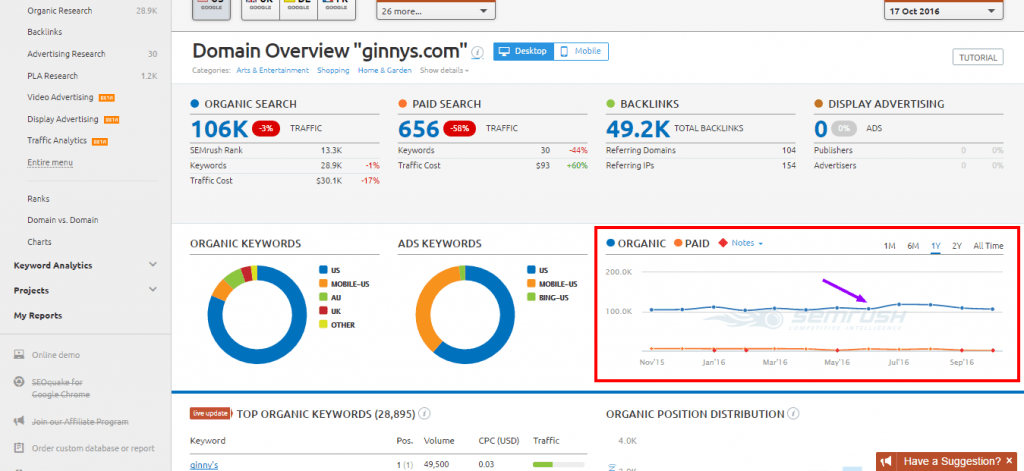
Let me show you an example. This recent post
discusses how a marketing company increased their client’s DA score in Moz by 7 points.
My response…. WHO CARES? An increase in DA does nothing for the client, unless the same metrics that influenced the DA have also influenced traffic and sales
. Is this usually what happens? Perhaps
. However, this piece of content appeared to have almost no significant impact on the website’s traffic
, as seen from SEMrush, outside of a slight temporary boost. (Now, we also know that SEMrush is not 100% accurate, but is again great for using as a benchmark tool. But we can guess that if the website had seen massive rank and traffic improvements from this case study, we would have seen some of those results in the post as well, don’tchya think?)
Why Estimated Competition Numbers
Don’t
Only Sorta Matter
I have one client that has been with me for 4 years. Every few months, they contact me in a panic because a certain competitor appears to be outdoing them in traffic according to an estimation tool. No matter how much actual data
, aka factual traffic reports
I show them which displays a consistent increase in traffic over 4 years, these numbers never fail to freak my client out, even though the tool they use doesn’t have access to either site’s actual data. It’s not like these are minor numbers, either – their monthly traffic from organic search has more than tripled
since we began working together.
Only use estimation tools as a benchmark
, never as a statement of facts. The numbers that matter above all else are the actual metrics
of your users. Make sure you know where the data is coming from and how to interpret it, no matter what type of data you’re looking at.
That’s pretty much all there is to it. Try to prioritize your metrics appropriately, that way you’ll be focusing on the marketing tactics that actually make a difference for you
, instead of just making you feel good. SEO
can increase the actual traffic to your website if people are searching for your services
– so can Facebook marketing, direct mail, etc etc. Just make sure you’re focusing on the traffic sources and the metrics that will truly make a difference for your business!
By Hannah Martin
•
July 29, 2025
Welcome to ProPages.ai!

By Hannah Martin
•
July 18, 2025
Let me guess: You set up your business, opened shop, did all the paper work, and even paid for a website.. but people still aren’t coming in? Well, you might have forgotten an important step, or maybe you just didn’t know where to start with it… You need MARKETING and ADVERTISING. Marketing your small business is the key to all business sales, unless your entire business model is based on impulse buys. With marketing and advertising, the saying that “the early bird gets the worm” really rings true. Here are 20 ways you can advertise your local business without any expertise, so you can increase sales and get more customers. Before you jump into the list, did you know that SEO (short for “Search Engine Optimization”) can help bring customers to your business naturally? Imagine being listed on the first page when people search for your services in Google. We can do that! Check out our SEO services here. Here are 20 affordable marketing and advertising ideas for your small business Submit your business name, address, and phone number to all of the local directories that cover your town. This means setting up profiles on websites like Yelp, Yellowpages, and Foursquare. ( Bonus : do SEO on your Yelp page to come up higher there, too.) Make sure your business is listed on Google+ for Business. If it is, make sure you claim the listing. If it’s not, make sure you set it up! (And then claim it.) Create an optimized Facebook page for your business. Invite all of your friends in the area, and run ads to people who might be interested in your services nearby. Put your vehicle in a vinyl wrap. This is like a mobile billboard that advertises your local business wherever you go! Establish your expertise on social media by creating posts about your professional/business accomplishments. Ask for referrals from past customers. You can even offer a referral free (like I do!) to encourage fee, word of mouth advertising. Submit for a local “coupon book” membership. Take out an ad in the local newspaper. Sponsor a local event, such as Relay for Life, or a community marathon. Run a contest. You can advertise this contest using any of the methods above. Consistently blog about topics related to your business, that your customers would find helpful. Retarget people who have already been to your website, but might not have contacted you on their first visit. Take out PPC ads. Optimize your website to rank organically in Google . This is called SEO, and it means that when someone searches for your services (for example, “roofing company in Las Vegas”), you’ll come up first! Advertise on local news websites. Place ads on Craigslist.org. Join your local Chamber of Commerce. Use press releases when there is significant news for your business to talk about. (A grand opening press release would definitely be appropriate!) Attend a BNI meeting for your local chapter Once you start using some of these tips, business will start coming in. From there, the most important thing to keep growing your business is to ensure customers come back , so make sure you’re providing the best experience possible after your advertising brings the customer in. Best of luck!